How to Build a Budget That Actually Works (Without Feeling Restricted)
If you've tried budgeting before and felt like you were constantly depriving yourself, you're not alone. Most budgets fail not because people lack discipline, but because the approach treats money management like a restrictive diet instead of a sustainable lifestyle.
I've watched the same pattern repeat dozens of times. Someone decides they need to "get serious about money." They download a budgeting app, meticulously categorize every expense, set aggressive savings goals, and commit to tracking every coffee purchase. For about two weeks, it works. They feel in control, motivated, proud of their discipline.
Then real life happens. A friend's birthday dinner runs over budget. Car maintenance costs more than expected. They forget to log a few purchases, the app fills with red warnings, and the whole system feels exhausting. Within a month, they've abandoned the budget entirely and feel guilty about it.
The problem wasn't them. The problem was the approach.
Budgeting doesn't have to be about restriction, deprivation, or tracking every penny. It's simply about being intentional with money—knowing where it goes and making sure it aligns with what actually matters to you. The right budgeting method should feel like a tool that creates freedom, not a cage that limits it.
This article walks through three proven budgeting approaches that work for different personalities, lifestyles, and financial goals. One of them will fit how you actually live, not how you think you should live.
Why Most Budgets Fail
Before jumping into methods that work, it helps to understand why so many budgets don't. It's rarely about willpower or discipline. Usually, it's one of these four problems.
The restriction trap. Many people approach budgeting the same way they approach dieting—cutting everything to the bare minimum, eliminating all "unnecessary" spending, and expecting themselves to maintain this indefinitely. It works for a while, until the deprivation becomes unbearable and they swing back to the other extreme.
I tried this early in my career. I decided to save aggressively by cutting out everything that wasn't essential. No coffee shops, no dinners out, no new clothes, no entertainment subscriptions. I lasted maybe six weeks before I cracked and spent an entire weekend overcompensating, undoing weeks of savings in one go. The problem wasn't that I lacked discipline—it was that the approach was fundamentally unsustainable.
The complexity problem. Some budgets require so much detailed tracking that they become a part-time job. Categorizing every transaction, reconciling accounts, reviewing spending reports—it takes hours each month. For people who genuinely enjoy financial management, this might work. For everyone else, it's exhausting.
The rigidity issue. Life doesn't follow neat monthly patterns. Some months have unexpected expenses. Some months have irregular income. Some months are expensive for reasons you can't control (insurance premiums, annual subscriptions, holiday gifts). A budget that doesn't account for this variability breaks down quickly.
The motivation gap. Many budgets focus on restricting spending without connecting it to anything meaningful. "Don't spend more than $200 on groceries" feels arbitrary and punishing. "Save $200 this month so you're closer to taking that trip to Japan" creates a completely different relationship with the same behavior.
The solution isn't to try harder with the same approach. It's to find an approach that actually fits how you think about money, how you live your life, and what you're trying to achieve.
Three Budgeting Methods That Actually Work
These aren't theoretical frameworks—they're methods people actually use successfully over years, not weeks. One of them will work for you.

Method 1: The 50/30/20 Rule (Simple & Flexible)
This is the method I recommend to almost everyone starting out. It's simple, flexible, and nearly impossible to fail at because it doesn't require detailed tracking or complex categories.
How it works:
Your after-tax income gets divided into three broad categories:
50% for needs – Essentials you can't avoid. Rent, utilities, groceries, insurance, minimum debt payments, transportation. The non-negotiables.
30% for wants – Everything else that makes life enjoyable. Dining out, entertainment, hobbies, subscriptions, shopping, travel. The things you choose to spend on.
20% for savings and debt – Emergency fund, retirement contributions, extra debt payments beyond minimums, investment accounts.
The beauty of this method is its simplicity. You're not tracking individual purchases or managing twelve different spending categories. You're just making sure your overall spending roughly aligns with these three buckets.
Real example:
Sarah earns $4,500 monthly after taxes. Here's how she applies 50/30/20:
Needs ($2,250):
Rent: $1,400
Utilities: $120
Groceries: $400
Car payment: $200
Insurance: $130
Total: $2,250
Wants ($1,350):
Dining out: $300
Entertainment: $200
Gym membership: $50
Shopping: $400
Subscriptions: $100
Hobbies: $300
Total: $1,350
Savings ($900):
Emergency fund: $400
401(k): $300
Extra credit card payment: $200
Total: $900

Sarah doesn't track every coffee or categorize individual transactions. She just makes sure her needs stay around $2,250, her discretionary spending stays around $1,350, and she's moving $900 toward savings and debt each month.
If she goes over in wants one month, she adjusts the next month. If her needs increase (rent goes up), she recalculates the percentages. The framework is flexible enough to handle real life.
Who this works for:
People who want structure without complexity. People who hate detailed tracking. People with relatively stable income and expenses. People who are just starting to take control of their finances and need something that won't overwhelm them.
Potential challenges:
If your needs are more than 50% of your income, the ratios don't work. High cost of living areas often make it impossible to keep housing, transportation, and basic expenses at 50%. In that case, adjust the percentages to what's realistic for you—maybe 60/25/15 or 65/20/15.
The method also requires some self-honesty about what's a need versus a want. That streaming service might feel essential, but it's not. Your smartphone is probably a need in 2025, but the latest model every year isn't.
Method 2: Zero-Based Budgeting (Maximum Control)
This is the method for people who want complete control and optimization. It requires more effort than 50/30/20, but it also gives you the clearest picture of exactly where every dollar goes.
How it works:
Every month, you assign every dollar of income to a specific category until you reach zero. Income minus all assigned spending and savings equals zero.
This doesn't mean spending everything—it means being intentional about everything. If you have $5,000 coming in, you decide exactly where all $5,000 goes before the month starts. $1,400 to rent. $500 to groceries. $300 to savings. $100 to restaurants. Keep going until there's nothing left unassigned.
The power of zero-based budgeting is awareness. Nothing disappears into "miscellaneous" or "I'm not sure where that went." Every dollar has a job.
Real example:
Marcus earns $6,200 monthly after taxes. Here's his zero-based budget:
Housing ($1,850):
Rent: $1,600
Utilities: $150
Internet: $100
Transportation ($520):
Car payment: $350
Gas: $120
Insurance: $50
Food ($650):
Groceries: $450
Restaurants: $200
Personal ($400):
Gym: $50
Phone: $80
Clothing: $150
Personal care: $120
Entertainment ($300):
Subscriptions: $80
Activities: $220
Debt ($800):
Student loans: $500
Credit card: $300
Savings ($1,200):
Emergency fund: $500
Retirement: $400
Vacation fund: $300
Irregular expenses ($480):
Car maintenance: $100
Medical: $80
Gifts: $150
Annual subscriptions: $150
Total: $6,200. Zero left over. Every dollar assigned.
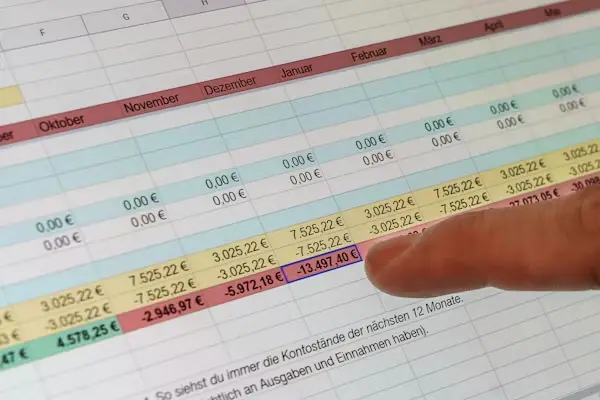
Marcus tracks actual spending throughout the month. If he spends $250 on restaurants instead of $200, he needs to pull $50 from another category or acknowledge he's over budget. The system creates accountability.
Who this works for:
People who like detailed control. People who want to optimize every aspect of spending. People working toward aggressive financial goals (paying off debt quickly, saving for a house). People who find detailed tracking satisfying rather than exhausting.
Potential challenges:
It requires time and discipline. You're looking at 2-3 hours at the start of each month planning the budget, plus weekly or daily tracking throughout the month. If you find this tedious rather than helpful, you won't stick with it.
Variable income makes zero-based budgeting harder. Freelancers, commission-based workers, and people with seasonal income need to budget based on minimum expected income and adjust when they earn more.
Method 3: Envelope System (Physical Limits)
This is the oldest budgeting method and still one of the most effective for certain people. It's particularly powerful for anyone who struggles with overspending in specific categories.
How it works:
You allocate cash to different envelopes, each representing a spending category. When the envelope is empty, you stop spending in that category. Physical constraint creates natural limits.
The traditional version uses actual envelopes and physical cash. The modern version uses separate bank accounts or apps that simulate envelopes digitally.
Real example (traditional cash version):
Elena gets paid $3,800 monthly. After automatic payments for rent, utilities, and savings, she has $1,600 for variable expenses. She divides it like this:
Groceries envelope: $500
Dining out envelope: $250
Entertainment envelope: $150
Gas envelope: $200
Shopping envelope: $300
Personal care envelope: $200
On the first of the month, she withdraws $1,600 cash and physically puts it in labeled envelopes. When she buys groceries, she pays from the grocery envelope. Dinner with friends comes from the dining envelope. Shopping comes from the shopping envelope.
If the dining envelope runs out on the 20th of the month, she doesn't eat out for the rest of the month. Period. The physical limit is absolute.
If she has money left in the entertainment envelope at month's end, she can roll it to next month or move it to savings. The flexibility is hers.
Real example (digital version):
James doesn't like carrying cash, so he uses the digital version. He has four checking accounts:
Bills account: $2,200 (rent, utilities, insurance)
Groceries account: $600
Discretionary account: $800
Savings account: $900
When he gets paid, money automatically splits into these accounts. He only uses his groceries debit card for food shopping. His discretionary account covers everything else variable. When an account hits zero, that category is done for the month.

Who this works for:
People who overspend with credit or debit cards. People who need tangible limits. People who find abstract budgets too easy to ignore. People who respond better to physical/visual systems than spreadsheets.
Cash creates psychological friction that digital spending doesn't. Handing over $100 in cash feels different than swiping a card for $100. That friction can be a powerful spending control.
Potential challenges:
Cash is inconvenient in 2025. Many businesses are card-only. Online shopping requires digital payment. You lose purchase protection and rewards that come with credit cards.
The digital version (multiple bank accounts) solves this but requires a bank that doesn't charge fees for multiple accounts and makes it easy to automate transfers.
The system also requires discipline to not "borrow" from one envelope to fund another. If you constantly raid your gas envelope to cover restaurant spending, you've defeated the purpose.
Choosing Your Method: Interactive Quiz
How do you feel about tracking expenses?
Your Recommended Budget Method:
Making It Stick
Creating a budget is easy. Following it consistently is harder. Here's how to make it sustainable.
Weekly money dates (15 minutes)
Pick one day each week—Sunday evening works for many people—and spend 15 minutes reviewing your spending. How are you tracking against your budget? Any adjustments needed? Any upcoming expenses to prepare for?
This weekly check-in catches problems early. If you're halfway through the month and have already spent 80% of your dining budget, you can adjust now instead of being surprised when the month ends.
Monthly reviews (30 minutes)
At the end of each month, do a more thorough review. What worked? What didn't? Were your category allocations realistic? What needs to change for next month?
This is also when you celebrate wins. Did you stay under budget in a category where you usually overspend? Did you hit your savings goal? Acknowledge progress, even small progress.
The 80% rule
If you hit 80% of your budget goals, you're winning. Perfection isn't the goal—sustainability is. Some months will be harder than others. Some months will have unexpected expenses. Some months you'll mess up and overspend.
That's normal. Progress beats perfection. A budget you follow 80% of the time is infinitely better than a perfect budget you abandon after three weeks.
Handling budget breakers
Unexpected expenses: Use your buffer fund first. If that's not enough, adjust other categories for the month. Move money from dining to car repair. Pull from entertainment to cover medical bills. The budget is a tool, not a tyrant.
Special occasions: Plan ahead when possible. If you know you have a wedding in June, start setting aside money in January. Birthday month coming up? Budget extra for celebrations.
Windfalls: Tax refunds, bonuses, gifts—decide your split before receiving them. A common approach: 50% to savings/debt, 30% to long-term goals, 20% for fun. Prevents the "found money" from disappearing without improving your financial position.
Common Mistakes to Avoid
Being too aggressive too fast. Cutting spending by 40% overnight might work for a week or two, but it's not sustainable. Make gradual reductions you can actually maintain long-term.
Forgetting irregular expenses. Annual costs don't disappear just because they're not monthly. Account for them by setting aside money each month.
No fun money. A budget that's all deprivation is a budget that will fail. Include discretionary spending for enjoyment, guilt-free.
Not adjusting as life changes. Got a raise? Update your budget. Moved to a new city? Adjust your categories. Had a kid? Your spending patterns are completely different now. Budgets should evolve with your life.
Comparing to others. Your coworker saves 40% of their income while you're at 15%. So what? They might have different circumstances, different priorities, different obligations. Your budget should work for your life and your goals, not match someone else's.
Giving up after one bad month. You overspent by $300 in February. Okay. Figure out what happened, adjust, and move on. One bad month doesn't erase three good months. Don't abandon the entire system because it wasn't perfect.
Final Thoughts
Budgeting isn't about restriction—it's about intention. It's about making sure your money is going toward things that actually matter to you instead of disappearing without you noticing.
The best budget is the one you'll actually use. That's it. Doesn't matter if it's theoretically less optimal than another method. A simple budget you follow consistently beats a perfect budget you abandon in three weeks.
Start with one of the three methods described here—50/30/20 if you want simple and flexible, zero-based if you want control and optimization, envelope if you need tangible limits. Give it at least three months before deciding if it works. The first month is learning, the second month is adjusting, the third month is when you start seeing patterns.
Your first budget won't be perfect. That's fine. You'll overspend in some categories, underspend in others, realize you forgot to account for certain expenses. Adjust and continue. The goal isn't perfection—it's awareness, intentionality, and gradual improvement.
Most importantly, remember that budgeting is a tool to help you live the life you want, not a punishment for spending money. If your budget makes you miserable, it's not working—even if the numbers look good on paper. Find an approach that gives you both financial progress and quality of life. They're not mutually exclusive.
Money is a tool. Your budget is the instruction manual. Use it wisely, adjust as needed, and give yourself permission to be imperfect while you figure it out.